Background
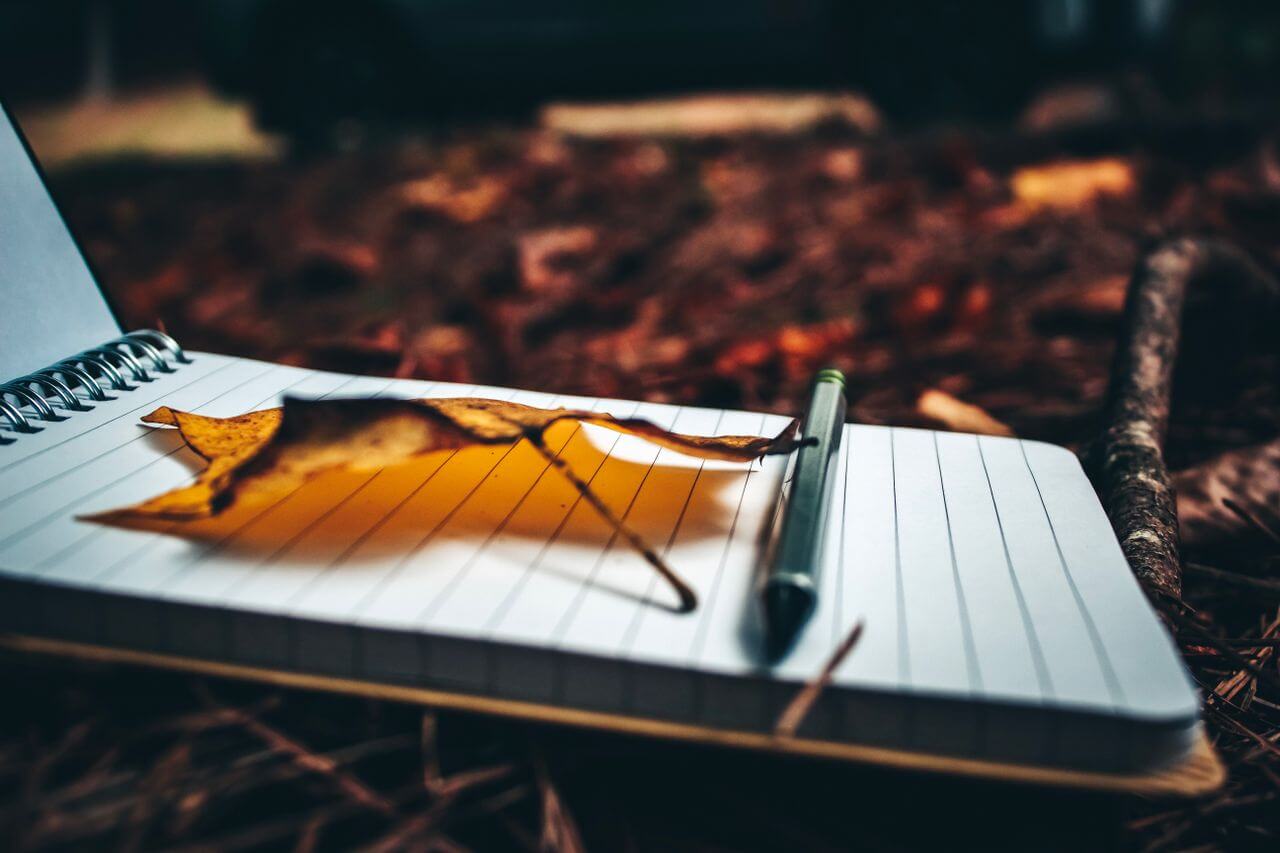
A great way to sharpen your observational skills and curiosity is to simply keep a ledger of the things you notice or question. This ledger is known as a nature journal.
Before the hesitation sets in, hear me out. Science or nature journals are not what the myths make you think.
You do not need to be an artist.
You do not need expensive or fancy supplies.
You certainly do not need to go into this project expecting perfection.
This is not a graded assignment. Science journals are subjective (based on your own feelings, opinions, and desires) in format, even if the content is meant to be objective (fact-based and true to everyone). Frankly, even content based on objective observations can include subjective notes or curiosities. You can explore the differences between subjective and objective more here.
What you do need to have in order to start this fun side quest:
- A willingness to try.
- An open mind.
- A smidgeon of creativity (I promise, even if you don’t think you have it in you, you more than likely do).
Materials
While you can absolutely start this project or grow it into using a gorgeous leatherbound, blank-page notebook or templated notebook, it is unnecessary. Look around your house. Do you have random scraps of paper? Maybe some unused copy paper? An old lined notebook with some blank pages to fill?
Use whatever you have available to you. Staple the scrap papers into their own little booklet or use the old notebooks that never got completely filled. You could also glue, tape, or use yarn or string to bind the pages on one side, creating a book. It doesn’t need to be extravagant. If you are really creative or digitally inclined, you could even use a drawing or notes app on a tablet, phone, or other device if desired. There are no wrong answers here.
Other materials you need depend on the style you wish to pursue, or maybe you want to explore them all! But it is encouraged to utilize pens, pencils, coloring utensils, or other materials lying around your house to keep it cheap and accessible.
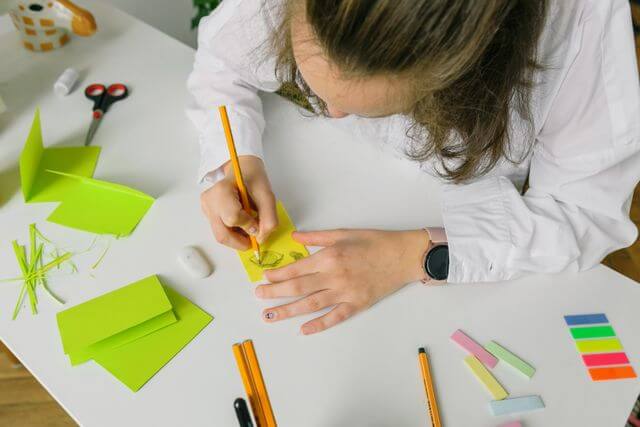
The beauty of making it yourself is that you can personalize it as much or as little as you desire! Want a pocket-sized guide you can tuck away and carry with you all day? Chop your scraps into smaller pieces and bind them together. Want to decorate or add fancy edges? You can do that too!
The Methodology
Remember when I said it doesn’t have to be fancy or perfect? This part is entirely up to you, but we will mention a few ways you can fill in your journal. Feel free to specialize in one area, try them all individually, or piece them together into your own style!
The Classic Sketches: This is your stereotypical approach (nothing wrong with that if you have the skill and desire) that utilizes hand-drawn sketches of the subject, with or without color. In addition to the sketches, you should add written notes about observations, questions, and curiosities.
Descriptive Writing: If you are better with words than you are with sketching, don’t be afraid to use bullet points and descriptive sentences or paragraphs as your main focus. Make the sketches secondary to your writing. Though it is still encouraged to try to sketch the subjects as well, using both images and words helps paint the full picture of the subject, improve your memory of the moment, and capture as much detail as possible.
When using descriptive writing as the focus, make sure to focus on how the subject appeals to the senses. A word of caution: you should not handle, taste, feel, or smell unfamiliar subjects, wild animals, or mysterious objects. Always maintain a safe distance from such subjects for obvious safety reasons.
- Sight: What colors, shapes, movements, etc. do you notice?
- Smell: Are there any particular smells associated with the subject? Observe from a safe distance away from the subject.
- Feel: Explore with caution and only in relevant scenarios, as you shouldn’t handle unfamiliar insects, plants, or any wild animals. Alternative observations could include textures that you can visibly see without handling the subject.
- Taste: Again, PROCEED WITH CAUTION! Do not taste random subjects you find in nature. If the subject is something you are familiar with—for example, if you are observing foods like the raspberries in your garden—then you could describe sweetness, bitterness, textures in the mouth, etc.
- Sound: Does the subject make any noise? This can be noise from vocal expression (i.e., a bird trilling), sounds of it moving (i.e., rushing water), or sounds of the subject interacting with other forces (like leaves rustling in the breeze or trees groaning in strong winds).
Trace and Preserve: When studying things like plants, a great technique is to use the actual subject itself. This can involve leaf rubbings, where you put the leaf under the page and use a pencil to rub over it. Other examples may be drying a flower in a press (which can be done at home using two pieces of paper sandwiching the flower and placing them between two heavy books) and then taping the flower to the page with your written observations.

For flowers, you can sometimes smash them onto the page using a rubber mallet, which can transfer the shape and color onto the paper. Make sure you perform this only in a safe, supervised environment, and don’t handle plants that are or may be toxic or poisonous.
General Diagrams: If you want to draw it but don’t want to get caught up in the sketching, go general! You can use basic shapes to make up the subject and add ample written details. An example could be using a large circle or oval for a chicken’s body, a rectangle for the neck, a circle for the head, and a triangle for the beak.
Crafter’s Delight: Maybe you want a more dynamic approach, and that’s okay! You can also use images that you capture with your phone or other devices and print them out (or trace them), magazine clippings that match your subjects, or other materials and treat this project like a nature scrapbook! Just make sure to still record as much detail as possible with added notes.
A great resource when starting this journey is John Muir Laws, as he has countless workshops and blog posts detailing tips, methods, and pointers for nature journaling.
If you discover more methods for recording your observations, feel free to share them!
Breaking the Ice
Once you’ve decided to pursue this gratifying journey, the next hardest step is just knowing where to start. Let’s make it as simple as possible. Remember, this isn’t about perfection, just recording your data in whatever way you see fit.
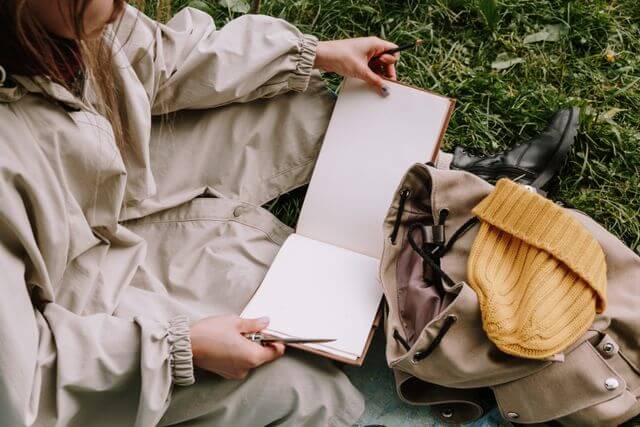
Here is a simple exercise to help you ease into keeping a science journal.
Step 1: Find a parking spot. No, I don’t mean for a vehicle. Find a cute little spot to park yourself for a few minutes. Maybe you saw a gorgeous shade tree on a walk the other day and you want to sit under it to look out at the world.
Step 2: Metadata. A great warm-up is to take stock of the day and environment before zeroing in on something. This can include the date, time, weather, temperature, etc. If you want extra drawing practice, try sketching the clouds you see or the general landscape where you’re sitting.
Step 3: Pick a subject. Once all of that is out of the way, what is one thing drawing your attention in the scene around you? Is it a really cool bug, a new plant you don’t know, or an animal grazing nearby? Whatever draws your focus the most, start with that and draw and record as many details as possible. You don’t have to narrate every detail in the scene around you. It’s okay to focus on one subject, especially to start.
Conclusion
This is a personalized adventure that does not revolve around perfection but instead participation and commitment to recording as much as you can. No matter how messy or silly you may think it looks, the data is there, and you don’t have to worry about forgetting anything.
My challenge to you is to take 10–15 minutes to try out a single exercise. Find your sitting spot, get your baseline, and focus on only one subject. It doesn’t have to take all afternoon, just a few minutes. The more you get into the practice of keeping a nature journal, the more you will start to be present in the world and take stock of all the beautiful wonders around you.
Stay curious, and happy sciencing!